“Lost is not a hopeless place to be. It is a place of patience, of waiting. Lost does not mean gone forever. Lost is a bridge between worlds, where the pain of our past can be transformed into power. You have always held the key to this special place, but now you are ready to unlock the door.”
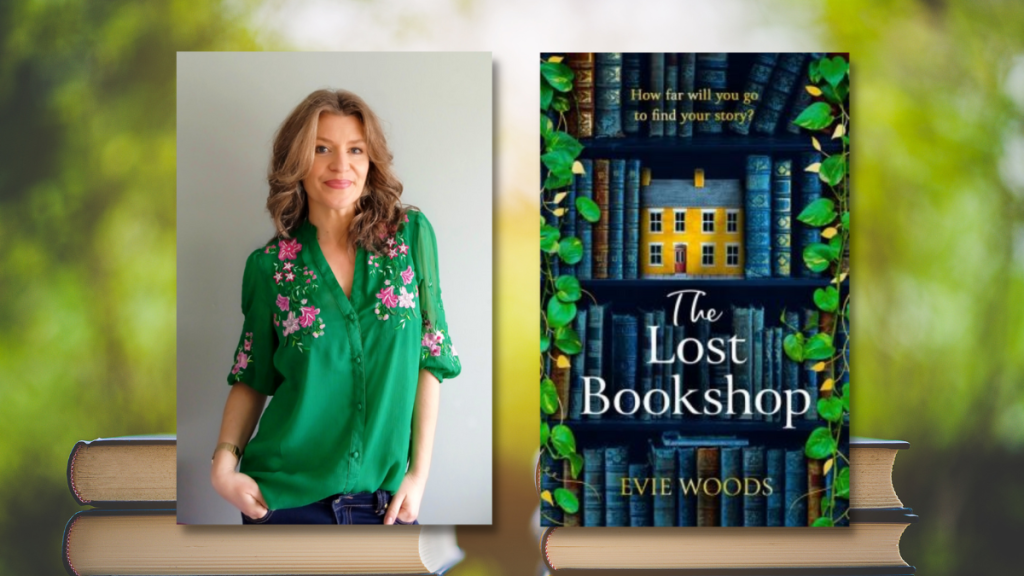
Sometimes a book comes along and vaguely intrigues you, but then takes you completely by surprise when you actually begin reading it. The Lost Bookshop by Evie Woods is such a magical, whimsical story that takes its reader on a journey that only book lovers would appreciate.
The novel is told in three perspectives: Opaline, Henry, and Martha. Opaline’s tale begins in the 1920s as she flees London from her oppressive brother and a forced marriage. Her tale takes her to Paris, Dublin, and back to London, as she discovers her talent for finding lost rare books and manuscripts. She finds solace in running a small bookshop that provides her with everything she needs.
In the present, Henry is searching for this magical bookshop that he is sure exists, but that no one has ever heard of. He runs into Martha, who has run away from her abusive husband and lives next door to where Henry is sure the bookshop exists. Their stories intermingle as Martha finds herself caught up in the search for the lost bookshop.
The Lost Bookshop is categorized as magical realism, and there is a touch of wonder and whimsy that is woven throughout the three narrators’ stories. The story takes a while to get going, as the reader wonders about the link between the three characters. But Wood weaves intriguing and engrossing tales for each of the characters so that you can’t help but long to return to Opaline’s story once Henry’s chapter starts or vice versa.
Opaline’s story is one of struggles, perseverance, and hope. Her love of books takes her to multiple cities as she tries to maintain an independent life. On her journey, she rubs shoulders with famous authors and survives the black market of book buying, all while trying to speak her opinions during a time when women didn’t have a voice. Her tale is probably my favourite, as she suffers from multiple heartbreaks and horrific circumstances, but still remains courageous.
Henry and Martha are equally courageous and persevere in the face of great difficulties. They each have their own struggles, which brings them both to Ha’penny Lane in Dublin. Henry is a PhD candidate and is on the hunt for a lost manuscript and the lost bookshop. Like Opaline, he has been in love with rare and lost books since he was a child, but his father has never supported his passions. By contrast, Martha doesn’t like books and has never enjoyed reading. Her life has been rife with problems with her abusive husband, but she finds solace as a housekeeper for a Mrs. Bowden, living in a basement apartment on Ha’penny Lane. She discovers a desire to go back to university and study.
Wood excels at creating three characters who are as real as the pages of a book; they all have multiple weaknesses and problems that bog them down. But throughout their journey, they all grow and flourish, the bookshop giving them all something to make them stronger. Through her whimsical and magical tale, Wood pays a beautiful homage to books, authors, the stories that have been told and the stories that have been lost.
 Check it out